员工与社会
人权政策
本公司遵循《联合国全球契约(UN Global Compact)》原则,并依据《世界人权宣言(Universal Declaration of Human Rights)》《国际劳工组织工作基本原则与权利宣言(ILO Declaration of Fundamental Principles and Rights at Work)》《联合国工商企业与人权指导原则(UN Guiding Principles on Business and Human Rights)》等国际公约的精神与原则,制定本公司人权政策。
本公司严格遵守当地劳动法律法规,并支持《世界人权宣言》《联合国全球契约》及《国际劳工组织多国企业与社会政策三方原则宣言》等国际公约的核心精神,确保日常运营及所有商业活动均符合相关规范。公司对人权议题采取积极态度,将人权考量纳入各项营运环节,适用对象涵盖员工、客户、供应商及其他商业合作伙伴。
2025 年,本公司持续于每周例会中宣导人权保障相关事项,确保员工基本权益获得充分维护。如遇重大变更事项,均依照《台北劳动基准法》相关规定,通过劳资协商程序办理。此外,为促进性别平等并防止职场霸凌,公司特制定《性骚扰防治措施、申诉及惩戒办法》,发布《禁止工作场所暴力的书面声明》,并提供畅通的申诉渠道,同时接受 SMETA 审核,持续完善公司社会责任管理体系,切实保障员工权益。2025 年度,公司未接获任何与人权相关的申诉案件。
公司重点关注的人权议题及具体落实措施如下:
| 人权维护 | |
采取的行动 |
|
评估机制 |
|
目标 |
短期目标:
中长期目标:
|
绩效结果 |
|
利益相关方沟通 |
|
| 人权议题 |
具体管理办法 / 措施 |
2025 年度执行情况 |
| 杜绝非法歧视,确保就业机会平等 |
公司制定《禁止歧视管理程序》,明确规定在招聘、录用、薪酬发放、职务晋升、奖励、培训机会等用工及雇佣行为中,不得因人种、肤色、年龄、性别、性取向、性别认同及性别表达、种族或民族、残疾、怀孕、宗教信仰、政治立场、社团成员身份、受保护的退伍军人身份、受保护的遗传信息或婚姻状况等因素,对员工实施任何形式的歧视。 |
2025 年度未发生任何歧视事件,并依法聘用残疾人员工 2 名。 |
| 禁止强迫劳动 |
公司明确规定,全体员工的工作均基于自愿原则,任何单位或个人不得以任何形式强迫、限制员工人身自由,不得存在剥削、奴役或人口贩卖等行为。 公司严格落实工时管理制度,工作时间不超过相关劳动法律法规规定的上限,每周(含加班)总工时不超过 60 小时,并确保员工每 7 天至少休息 1 天。员工加班均基于自愿原则,公司不强制安排加班。 |
1. 持续落实工时管理,确保符合劳动法律法规相关规定。 2. 2025 年度未发生任何强迫或强制劳动情形。 |
| 禁止使用童工 |
公司制定《童工与未成年工管理规定》,明确禁止聘用未满 16 周岁的童工。 |
2025 年度未发生雇用童工的情况。 |
| 员工身心健康与工作生活平衡 |
公司通过提供驻场医疗服务、定期组织员工健康检查,并开展员工年终聚会、员工旅游及各类文体娱乐竞赛活动,关注员工身心健康,增强团队凝聚力。 |
台湾地区据点共举办 3 场员工娱乐活动,累计参与 444 人次;同步推进年度员工健康体检,共 115 人完成检查,并规划开展 52 场驻场医疗服务,健康宣教参与人数累计 148 人。扬州据点共举办 8 场员工娱乐活动及竞赛,累计参与 2,100 人次;共有 229 人接受员工健康检查,264 人参加职业健康检查,后续持续强化员工健康管理与照护措施。 |
人权风险识别与评估
永道高度重视全体员工的安全、健康与人格尊严,遵循相关劳动法律法规及国际人权公约要求,包括《劳动基准法》《职业安全卫生法》《性别工作平等法》等相关法律规范,定期开展人权尽职调查工作,对人权相关议题的风险进行识别与评估,具体流程如下:
| 1. 识别与评估 | 对已发生及潜在的人权影响进行系统识别与评估。 |
| 2. 采取行动 | 根据识别与评估结果,制定并实施相应的应对措施。 |
| 3. 成效检视 | 持续跟踪应对措施的执行效果,评估其是否有效回应相关人权负面影响。 |
| 4. 对外沟通 |
对外披露企业针对相关人权影响所采取的应对方式与管理情况。 |
人权尽职调查
本公司严格遵守当地劳动法律法规,支持《世界人权宣言》《联合国全球契约》《国际劳工组织多国企业与社会政策三方原则宣言》等国际公约的基本精神,并依据相关指导原则制定公司人权政策,确保相关人员在工作过程中获得公平、尊严的对待。公司在员工招聘、用工管理及职业发展等方面,承诺遵循并落实人权相关政策要求。
永道参考国际人权公约、相关指引以及标杆企业发布的人权尽职调查报告,对人权风险议题进行梳理,并对价值链中可能存在的人权风险事项进行评估,纳入公司人权风险评估流程。本年度针对内部员工,通过线上及纸质问卷相结合的方式开展调查,实施内部员工人权风险评估。
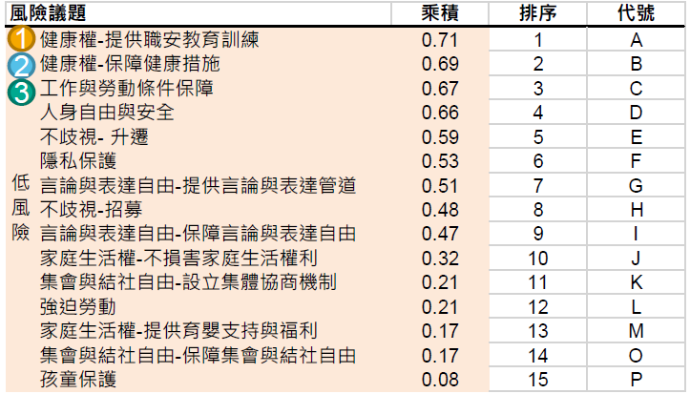
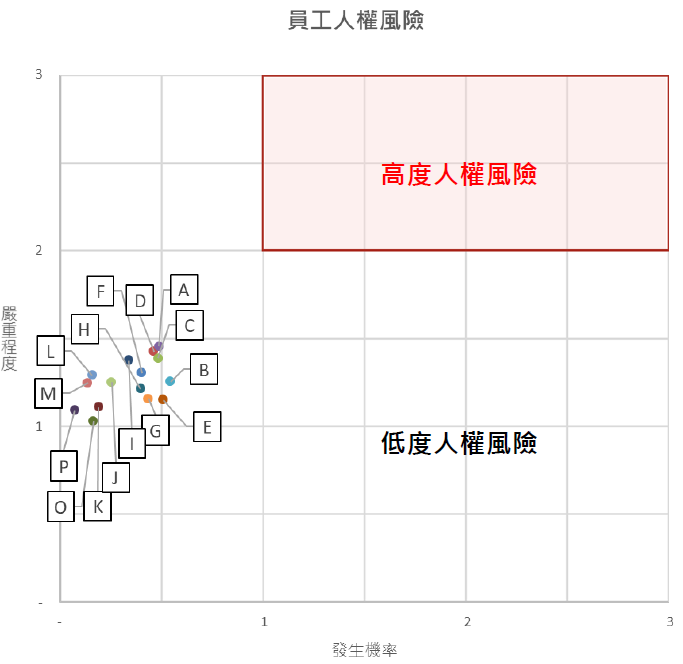
问卷内容主要评估各项人权风险议题的「发生概率」与「严重程度」,发生概率分为 0 分 = 不会发生、1 分 = 概率较低 ( 1% - 30% )、2 分 = 存在一定概率 ( 31% - 60% )、3 分 = 发生概率较高 ( 高于 61% ),严重程度分为 0 分 = 不会产生影响、1 分 = 影响不严重、2 分 = 影响较为严重、3 分 = 影响非常严重 ),公司根据问卷回收结果形成「人权风险矩阵」,并按照以下标准将人权风险划分为三个等级:
- 高风险:发生概率高于 1 分,且严重程度高于 2 分
- 中风险:发生概率高于 1 分,且严重程度未达到 2 分
- 低风险:发生概率未达到 1 分
本次调查共回收问卷 758 份,其中台北地区 147 份,扬州地区 611 份。评估结果显示,根据 2025 年员工人权尽职调查结果,尚未识别出中风险及以上等级的人权议题。
公司将延续上述评估结果,于 2026 年持续关注潜在人权风险,并进一步强化相关预防与缓解措施,确保现有人权应对机制的有效运行。未来亦将根据经营环境变化及实际需求,适时重新检视人权风险评估工作,持续提升人权管理水平。
人权教育培训
为提升员工在履行业务职责过程中对相关合规要求的认知,公司每年结合实际运营情况,对相关规章制度进行修订或新增,并通过宣贯培训的方式进行重申,确保员工遵守法律法规及职业道德要求,维护公司资产、合法权益及企业形象,避免违规行为发生,保障公司持续稳健经营。此外,公司亦组织或参与内部及外部人权相关培训课程。
2025 年,扬州据点面向员工开展人权保障相关培训,培训总时长为 36 小时,累计 36 人次参与人权教育培训。通过相关培训,员工对职场道德规范及社会责任的理解进一步加深,有助于改善工作环境、提升员工综合素质,支持公司长期发展。
政策落实情况(2025 年)
公司每年度开展人权及职场多元相关评估,检视不同群体在劳动环境及薪酬待遇方面的公平性。2025 年评估结果显示,未识别出中高风险等级的人权议题,表明现行管理措施具备成效。
综合考虑各运营据点的人力规模及运营成熟度,公司于 2025 年针对主要运营据点披露具体落实情况如下:
- 台湾据点:女性员工占全体员工约 56%,女性在管理岗位中的占比超过 50%。员工年龄结构覆盖多个世代,其中 30–50 岁为主要核心人力。公司定期检视性别薪酬差异情况,2025 年男女员工薪酬平均值差距约为 5.96%,中位数差距约为 2.78%。同时,公司依法持续聘用残疾人员工,落实职场平等。
- 扬州据点:女性员工占全体员工约 45%,在基层及中层管理岗位中保持一定比例。员工年龄结构以 30–50 岁为主,显示人力结构整体稳定且具备代际多样性。公司持续关注并检视扬州据点的性别薪酬差异情况,作为后续管理与改善的参考依据。
至於越南、美国(Houston)及日本据点,目前仍处于设立或人员扩编初期阶段,现阶段以制度层面的落实为主,后续将随着人员规模及结构趋于稳定,逐步纳入量化信息披露。
2025 年内部及外部利益相关方申诉渠道
申诉渠道如下:
人力资源部电话:(+886) 2 2269-0700 转 632
台北据点申诉渠道:tw-hr@arizonrfid.com
扬州据点申诉渠道:公司意见箱